
The Art of Talking to AI (And Why Most People Are Doing It Wrong)
Most people talk to AI the wrong way, treating it like a form to be filled instead of a conversation. This article shows how the way you phrase prompts can mean the difference between bland, robotic outputs and engaging, useful results. Using playful analogies and side-by-side examples, it highlights why treating AI as a creative partner matters more than which model you use, and introduces the Scout AI Studio Prompt Crafter as a tool that turns messy instructions into clear, compelling prompts.
Picture this: You're trying to get directions from a friend. You could mumble "downtown... food... maybe?" Or you could say, "I'm looking for that cozy Italian place near the bookstore on Orchard Road where we can sit outside."
Same destination. Completely different outcomes.
That's exactly what's happening every time you write a prompt for AI. The difference between getting generic, robotic responses and getting something that actually works often comes down to one thing: how you ask the question.
The Plot Twist: It's Not About the AI, It's About You
We spend so much time obsessing over which AI model to use (ChatGPT vs. Claude vs. the latest shiny thing), but here's what nobody talks about: the magic doesn't happen in the model. It happens in the 30 seconds before you hit "send."
Let me show you what I mean. Here are two prompts for the exact same event invitation:
Event: AI Masterclass. Type: Product launch. Format: In-person. Audience: Customers / clients. Size: Massive (1000+). Tone: Community-driven & welcoming. Purpose: Innovation & future trends. Venue: Restaurant / café. Location: Southeast Asia. Format: Media launch. CTA: Apply to attend. Follow-up: Key takeaways summary. Additional features: Q&A session, Photo booth, Welcome gifts.
Example: "Prompt A: Metadata style."
Draft an engaging invitation for an in-person AI Masterclass and product launch aimed at a massive audience of 1000+ customers and clients. The event, focused on innovation and future trends in AI, will take place at a vibrant restaurant or café in Southeast Asia. Emphasise a community-driven and welcoming tone, highlighting the interactive features such as a Q&A session, a photo booth, and welcome gifts. Include a clear call-to-action for attendees to apply for participation, and mention that a summary of key takeaways will be provided post-event. Ensure the invitation captures the excitement and value of being part of this transformative experience.
Example: "Prompt B: Narrative style."

The first one looks like someone's shopping list, its functional and transactional - just like a basic sandwich. The second reads like you're actually inviting people to something special.
Same information. Wildly different energy.
But wait, there's more. Here's another example that really drives the point home:
Create a compelling social media call-to-action post with the following specifications: Subject/Message: Click here Platform: Facebook Post Format: Video (long-form) Content Type: Interactive / quiz Tone: Empathetic & supportive Audience: Boomers (56+) Location: APAC Goal: Conversion (sales, purchase) Visual Style: Corporate / professional CTA Style: Conversational (Let's chat, Tell us…) Hashtag Strategy: Trending hashtag Posting Time: Evening Power Words: Bold, Culture, Growth, Impact Please include: - Engaging copy that resonates with the target audience - A clear and compelling call-to-action - Relevant hashtags based on the strategy - Visual description or suggestions - Optimal posting recommendations - Engagement tactics to maximiSe reach and interaction.
Example: "Prompt A: Metadata style."
Create a Facebook video post targeting Boomers (56+) in the APAC region with an empathetic and supportive tone. The goal is to drive conversions through an interactive quiz format.
Engaging Copy:
Example: "Prompt B: Narrative style."
See the pattern?
The first prompt reads like a form you'd fill out at the DMV. The second one feels like you're actually talking to someone who understands social media and knows how to connect with people.
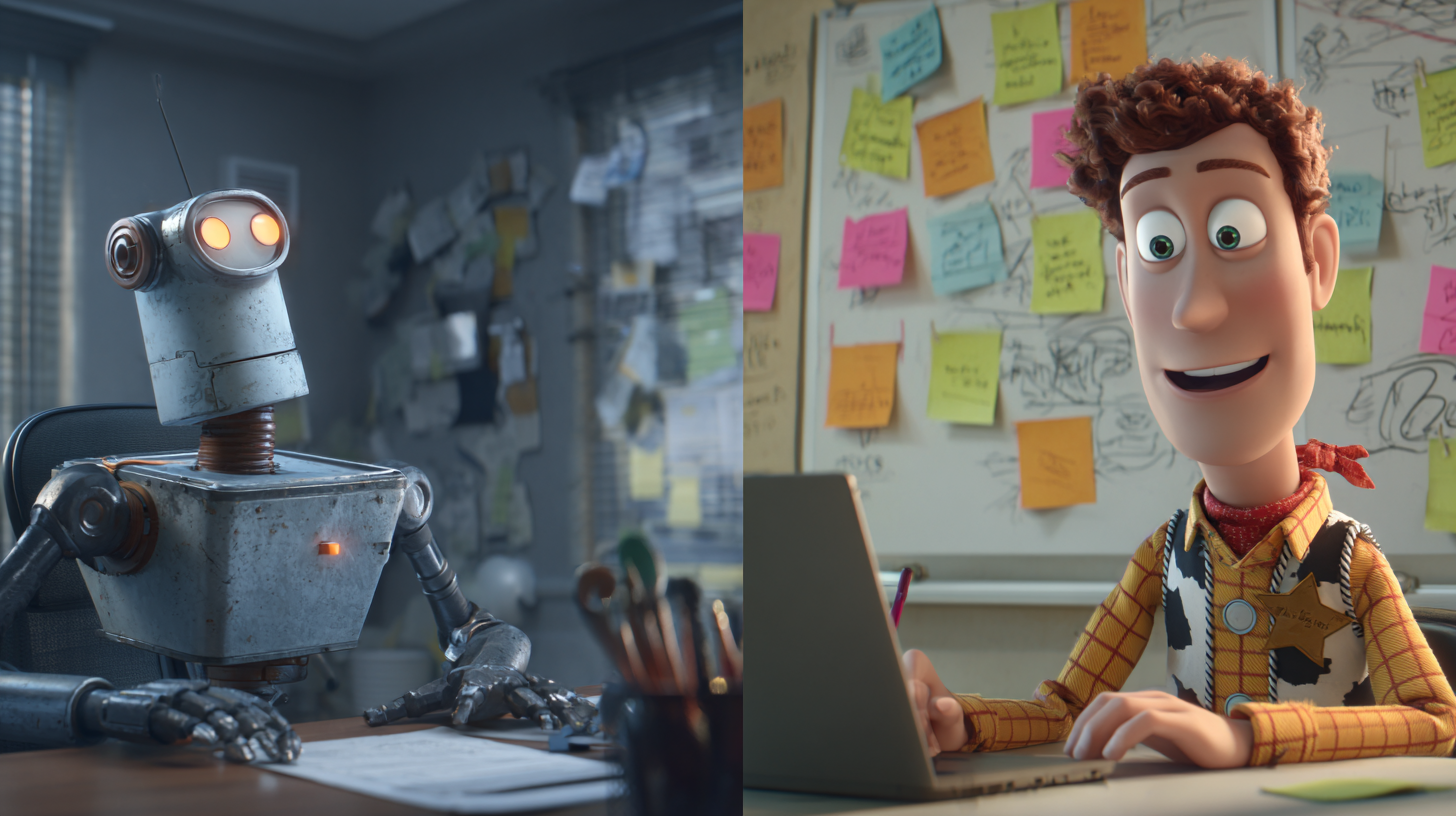
When you treat AI like a form-filling robot, you get robotic outputs. When you treat it like a creative collaborator, it rises to the occasion.
Why Your Brain and AI's "Brain" Want the Same Thing
Here's the thing: AI models are surprisingly human in how they process information. They pick up on context, mood, and structure just like we do.
Feed an AI a bunch of bullet points, and it'll give you back something that feels like... well, bullet points. But give it a story, paint a picture, set a scene? Suddenly you're getting responses that have personality, nuance, and actually sound like something a human would want to read.
It's like the difference between asking someone to "make food" versus "help me create a cozy dinner that'll make my friends feel welcome." Same basic request, but one gives you a sandwich and the other gives you an experience.
The Problem With Playing Prompt Roulette
Most of us are stuck in this endless cycle of prompt trial-and-error. You type something, get a meh response, tweak it, try again, get slightly less meh, repeat until you either give up or accidentally stumble onto something good.
It's exhausting. And honestly? Life's too short for prompt roulette.
Enter the Scout AI Studio Prompt Crafter (AKA Your New Secret Weapon)
We got tired of watching people struggle with this, so we built something to fix it. Inside PromptAndGo.ai, there's now a whole suite of tools called Scout AI Studio Prompt Crafter that basically acts like a personal trainer for your prompts.
Here's what it does:
- Turns your brain dumps into stories. Got a messy list of requirements? The tools help you transform it into a coherent, compelling narrative that AI can actually work with.
- Lets you experiment with personality. Want something more professional? More casual? More persuasive? You can test different tones and see how they change the output.
- Shows you the before and after. Side-by-side comparisons so you can see exactly how small tweaks in your wording create big changes in the results.
- Saves the good stuff. Found a prompt that works? Save it, share it with your team, and never have to reinvent the wheel.
Think of it like having a really good editor who specializes in talking to robots.
The Bottom Line
Writing prompts isn't just about giving instructions—it's about having a conversation. And like any good conversation, the way you say something matters just as much as what you're saying.
The difference between treating AI like a search engine and treating it like a creative partner could be the difference between getting work done and getting work done well.
Scout AI Studio Prompt Crafter just makes it easier to have better conversations.
👉 Ready to stop playing prompt roulette? Try PromptAndGo.ai's Scout AI Prompt Studio, and see what happens when you start speaking AI's language fluently.
Related Resources
Found This Helpful?
Explore more tips and guides to enhance your AI prompting skills.
Browse More Articles